
Domitian Gold Aureus Coin
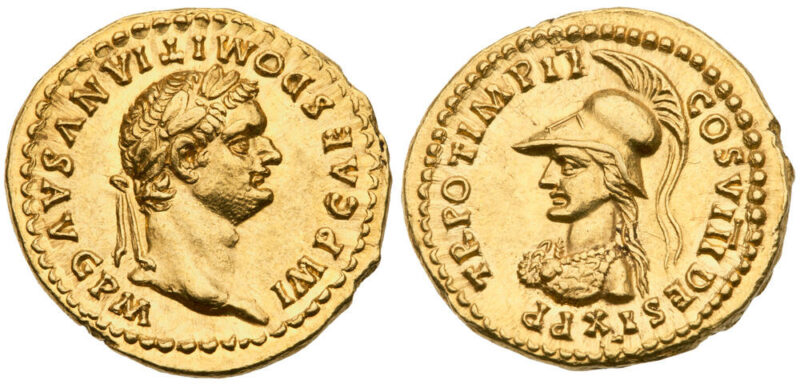
Extremely Fine: Up to: £27,000
Coins from the reign of Domitian (AD 81–96) are notable for their high artistic quality and the emperor’s frequent depictions of his patron deity,
Minerva. While his silver denarii are common and affordable for many collectors, his gold aurei and specific “Germanic victory” bronze sestertii can command very high prices due to their historical significance and rarity.
Most Valuable Domitian Coins
The following coins represent the high-value and historically significant issues from his reign:
- Gold Aureus (Rome Mint, Minerva Reverse): Domitian struck a vast series of gold coins featuring Minerva in various poses (advancing with a spear, standing on a column, etc.).
- Market Value: A high-grade specimen in “Choice AU” condition is currently valued at approximately £27,000. More circulated or common types typically range from £5,450 to £11,500.
- Mintage Information: Struck primarily at the Rome mint; while gold production was steady, high-relief portraits and specific dates (like AD 82 or AD 92-94) are considered “very rare”.
- Bronze Sestertius (Germanic Victory/Rhine Type): Commemorates Domitian’s campaigns against the Chatti. One rare type depicts the Rhine god lying at the emperor’s feet.
- Market Value: Rare varieties in collectable condition are valued around £433, while those depicting Domitian receiving a surrender can reach £480.
- Mintage Information: Identified as “rare in reference to his Germanic campaign”.
- Silver Denarius (High Grade/Rare Issues): The most accessible silver unit. High-grade (XF to AU) specimens are prized for their sharp details of Minerva.
- Market Value: NGC-graded “Extremely Fine” (XF) specimens typically cost around £260. Standard “Very Fine” (VF) examples can be found for £120 to £150.
- Mintage Information: Massive quantities were struck, but certain early issues as Caesar (under his father or brother) are scarcer than his imperial issues.