Naxos Silver Tetradrachm Coin
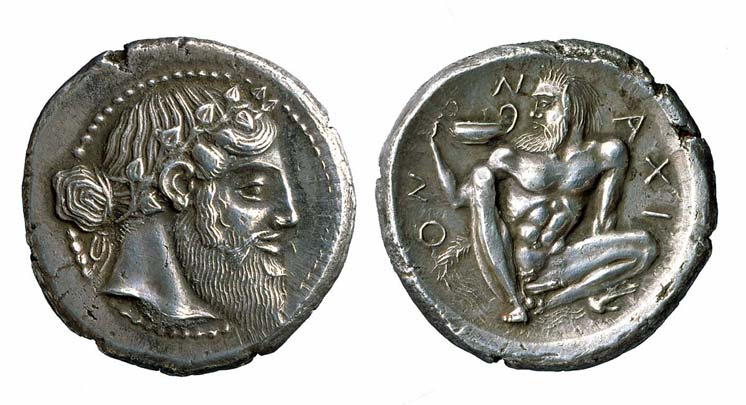
Extremely Fine: Up to: £320,000
The Silver Tetradrachm of Naxos (Sicily), particularly those minted around 460 BC, is widely considered one of the most artistically superior coins of the ancient world. These coins were issued to celebrate the return of the Naxian population to their city after being expelled by the Syracusan tyrant Hieron.
Top Market Values and Auction Records
Because of their extreme rarity and status as “masterpieces” of Greek engraving, top-tier specimens can reach astronomical prices.
- World Record Specimen (Aitna Master): A specimen from the famous America Collection, attributed to the “Aitna Master,” sold for 600,000 Swiss Francs (~$613,999) in 2016.
- High-End Collectors’ Grade: Exceptionally fine examples are often valued between £150,000 and £320,000.
- Recent 2026 Auction Result: A tetradrachm from circa 430–420 BC realized €30,000 in March 2026.
Standard Collectable Grade: More common but still prestigious types from circa 430–415 BC have recently sold for $35,000 (~£27,500)
Mintage and Rarity Information
Ancient minting records do not exist in the modern sense, but rarity is established through numismatic study and survival rates.
- Rarity Index: The Naxos tetradrachm has a Numista Rarity Index of 94/100, marking it as one of the rarest ancient coins available.
- Historical Context: The most valuable “Dionysos/Silenos” types were struck during a brief period following 461 BC. Later issues from circa 415 BC exhibit a more refined “Classical” style but remain very rare.
Survivor Scarcity: Only a small number of these coins are known to exist; for certain high-end varieties, only a handful of specimens are documented in private and museum collections.
Key Identification Features
- Obverse: A dignified, bearded head of Dionysos facing right, typically wearing an ivy wreath or a wide ribbon (tainia).
- Reverse: A naked, bearded Silenos (a companion of Dionysos) squatting facing, holding a two-handled wine cup (kantharos).
- Legend: Features the inscription NAXION (“of the Naxians”)