
Panticapaeum Gold Stater Coin
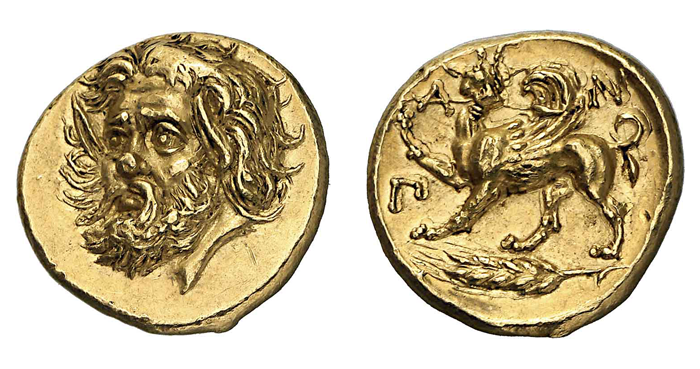
Extremely Fine: Up to: £4.84 million
The Panticapaeum Gold Stater (c. 350–300 BC) is currently the most expensive ancient coin ever sold at auction. Minted in the ancient Greek city of Panticapaeum (modern-day Crimea), it is considered a pinnacle of classical Greek numismatic art.
Record-Breaking Value
A world-record price was set in May 2023 for a unique specimen that highlights the extreme value of this issue.
- World Record (May 2023): A specimen sold for $6 million (approx. £4.84 million or 5,390,000 CHF) at a Numismatica Ars Classica auction in Zurich.
- Previous Record (2012): A similar stater previously held the record, selling for $3.8 million at the Baldwin’s Prospero Collection auction.
Accessible Quality: While the record-breaking 3/4-view portrait is unique, more standard “profile” gold staters from this period have sold recently for approximately $196,000 (£154,000).
Mintage and Rarity
Like other ancient coins, exact mintage figures are unknown, but rarity is determined by surviving specimens and die varieties.
- Extreme Scarcity: Most known specimens are held in major museum collections, such as the State Hermitage Museum and the Berlin Münzkabinett.
- Unique Design: The $6M record-holder is believed to be the only specimen in private hands of its specific type, featuring a three-quarter view of the satyr’s head—an artistic rarity for the time.
Historical Provenance: The record coin was famously part of the Hermitage collection until it was sold by Joseph Stalin in 1934 to raise foreign currency for Soviet industrialisation.
Key Specifications
- Obverse: Features a highly detailed, wide-eyed satyr (often identified with the god Pan), intended as a pun on the name of King Satyros I.
- Reverse: Depicts a griffin with a spear in its beak, standing on an ear of grain—representing the region’s importance as a grain producer and the myth of griffins guarding gold in the Scythian mountains.
- Weight: Standard gold staters typically weigh around 9.09g to 9.12g.