
1826 George IV Gold Proof Five-Pounds coin
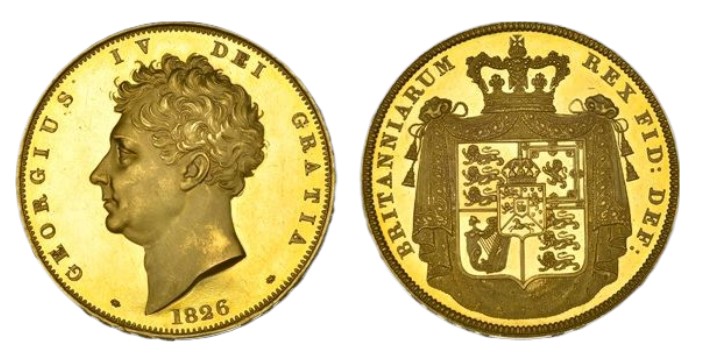
The 1826 George IV Gold Proof Five-Pounds coin is an extremely rare numismatic treasure, with recorded sale prices ranging from approximately £40,000 to over £1 million, depending on its certified grade and condition.
Recent & Notable Sale Prices
Highest Recorded Sale: A specimen in exceptional condition sold in 2021 for $1.44 million (approx. £1.04 million).
Grade PF66 Ultra Cameo:* Sold in Europe for roughly £370,000 (November 2020).
Grade PF66 Ultra Cameo: Sold in North America for roughly £275,000 (November 2020).
Grade PF62+ Ultra Cameo: Sold in the Far East for roughly £195,000 (November 2020).
Grade PF61: Currently listed or recently valued at approximately £79,500.
Record Auction Price (MDC Monaco): Lot 802 sold for €340,000 on 29 October 2020.
Key Identification Factors
Rarity: Only about 150 to 400 pieces were originally struck, primarily for the 1826 Proof Sets.
Design: Features the “Bare Head” of George IV by William Wyon on the obverse and a crowned shield of arms on the reverse.
Edge Inscription: The edge typically bears the Latin phrase DECUS ET TUTAMEN ANNO REGNI SEPTIMO.
Warning on Replicas: Many “1826 Five Pound” coins found in casual listings for £10–£15 are gold-plated base metal restrikes or “fun” historical copies rather than genuine gold proofs.
- Mintage: Extremely low; estimates typically range from 150 to 225 pieces.
- Metal: 22-carat gold (0.917 fineness).
- Weight: Approximately 39.94 grams (containing roughly 1.1775 oz of pure gold).
- Diameter: 36–38 mm.
- Designers: The obverse “bare head” was engraved by William Wyon, while the reverse was designed by Jean Baptiste Merlen.