
Alexander the Great Silver Decadrachm Coin
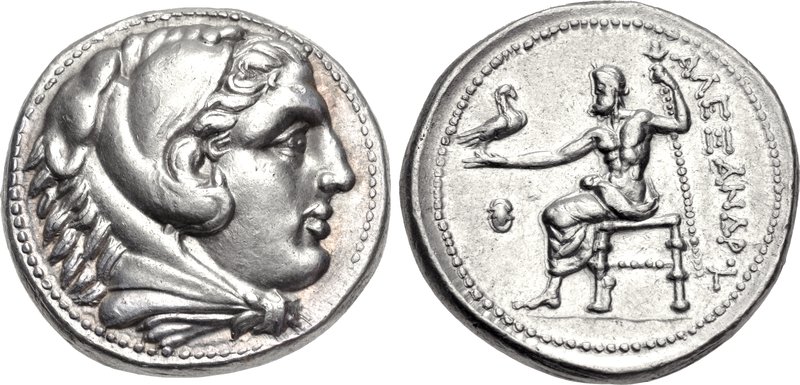
Extremely Fine: Up to: £793,650
The Alexander the Great Silver Decadrachm (c. 326–323 BC) is a massive and legendary coin, issued either late in Alexander’s life or shortly after his death. These “Victory” coins are among the most sought-after prizes in numismatics, often called the “Porus” Decadrachms because they commemorate Alexander’s victory over the Indian King Porus at the Battle of the Hydaspes.
Market Values & Auction Records
Because of their historical weight and extreme scarcity, these coins almost always reach six or seven figures.
- World Record Price: A specimen in exceptional condition sold for $1,000,000 (£793,650) at a Heritage Auctions event.
- High-End Average: Most specimens appearing at elite auctions (like CNG or NAC) realize between $150,000 and $450,000 (£119,000–£357,000).
- Recent Listing (2025/2026): A decadrachm of the “Babylon” mint in “Very Fine” condition was recently estimated at £158,000.
Comparison: A standard Alexander Tetradrachm (the common 4-drachma unit) typically sells for £400 to £1,200.
Mintage & Rarity
Like other ancient masterpieces, exact production numbers are unknown, but rarity is extreme:
- Survival Count: Only about 25 to 30 specimens of the “Porus” type are known to exist worldwide.
- Mint Location: They were primarily struck in Babylon, which served as Alexander’s administrative capital during his eastern campaigns.
- Historical Rarity: These were likely not circulation currency but medallions presented to high-ranking Macedonian officers as rewards for their service in the Indian campaign.
Key Identification Features
- Obverse: Alexander the Great on his horse, Bucephalus, attacking King Porus, who is seated on a massive war elephant.
- Reverse: Alexander standing in military dress, holding a lightning bolt (identifying him with Zeus) and being crowned by a flying Nike.
Weight: A massive 42g to 43g of silver—ten times the weight of a standard drachm.
Modern Replicas
Because of their million-dollar value, the market is flooded with high-quality museum replicas and silver-plated fakes. Authentic pieces are almost exclusively sold through major international auction houses and are nearly always NGC/PCGS certified.