
Augustus Gold Aureus Heifer Coin
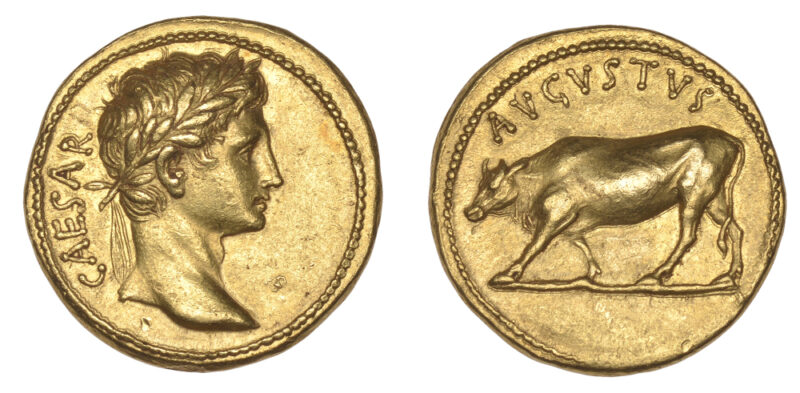
Coins from the reign of Augustus Caesar (27 BC – 14 AD) are among the most collected in the Roman series, as they represent the foundation of the Roman Empire’s monetary system. Like other ancient coins, exact mintage figures are not historically recorded, so rarity is determined by the number of surviving specimens.
Most Valuable Augustus Caesar Coins.
The highest-value coins of Augustus are typically gold aurei with unique or rare reverse designs.
Gold Aureus “Heifer” (c. 27–18 BC): This coin is one of the most famous and expensive Roman coins ever sold. It depicts a young Augustus on the obverse and a heifer—based on a lost Greek masterpiece—on the reverse.
Market Value: A unique version sold for £480,000 ($784,000) at auction in 2014.
Mintage Information: Only 22 surviving examples of the heifer-reverse aureus are known, with 15 held in museums.
Silver Denarius (Augustus and Agrippa, 13 BC): Struck at the Rome mint, this rare silver coin features the bare head of Augustus on one side and his general, Marcus Agrippa, on the other.
Market Value: High-grade specimens are currently offered for approximately £11,250.
Mintage Information: Classified as “rare” with no recorded mintage.
Silver Denarius “19 Laurel Trees”: A rare Imperial silver issue featuring the unique reverse of laurel trees, symbols of the Emperor’s power.
Market Value: Examples in collectible condition are valued at around £1,122.
Mintage Information: Unrecorded, but considered a scarcer variety than standard issues.
Silver Denarius (Caius and Lucius, 2 BC – 4 AD): One of the most common but historically significant denarii, depicting Augustus’s grandsons.
Market Value: Prices typically range from £210 to £432, depending on grade and mint location (often Lugdunum).
Mintage Information: This was a massive issue intended to circulate widely throughout the Empire.