
Hadrian Gold Aureus Coin
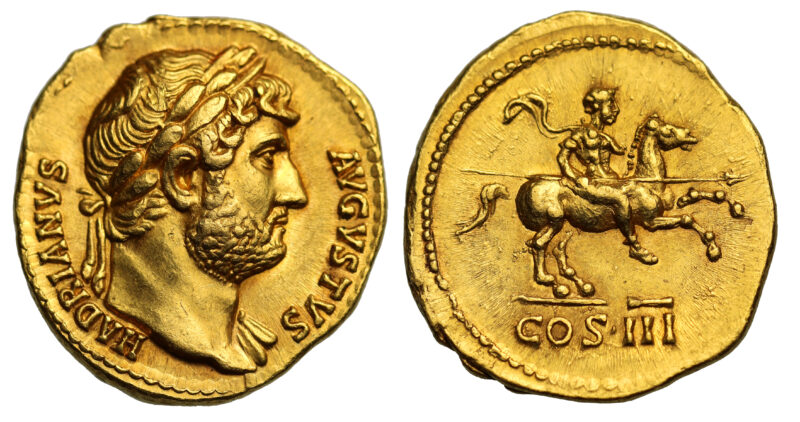
Extremely Fine: Up to: £6,372
Coins from the reign of Hadrian (AD 117–138) are highly sought after for their artistic diversity, particularly the “Travel Series” which depicts the various provinces he visited. High-value specimens typically include gold aurei and rare “Province” or “Restitutor” sestertii.
Most Valuable Hadrian Coins
Rarity in Hadrianic coinage is often driven by exceptional grade and historically significant reverse types.
- Gold Aureus (Posthumous Trajan / “Divo Traiano”): Struck early in his reign to honor his predecessor and father-by-adoption, Trajan.
- Market Value: An extremely rare, “fine style” specimen is currently valued at approximately £9,528.
- Mintage Information: Unrecorded, but classified as “extremely rare” with very few surviving examples.
- Gold Aureus (Hadrian on Horseback): Features the emperor on a galloping horse, symbolizing his constant travels.
- Market Value: A “good extremely fine” specimen is valued at approximately £6,372.
- Mintage Information: Struck at the Rome mint (c. AD 125–128); considered a rare and prestigious issue.
- Silver Denarius (“Travel Series” – Africa): Coins from the “Provinces Cycle” are highly popular. The “Africa” type depicts the province personified with an elephant-skin headdress.
- Market Value: A rare “British find” specimen in high grade has been listed for £10,000.
- Mintage Information: While silver denarii were produced in large quantities, specific “Province” types in top condition are scarce.
- Bronze Sestertius (Restitutor Italiae): Part of the “Restitutor” series where Hadrian is shown raising a kneeling personification of a province.
- Market Value: High-grade specimens can reach £1,300 (€1,500) at auction.
- Mintage Information: Struck in Rome (c. AD 130–133); these large bronzes served as significant visual propaganda