
Nero Gold Aureus coin
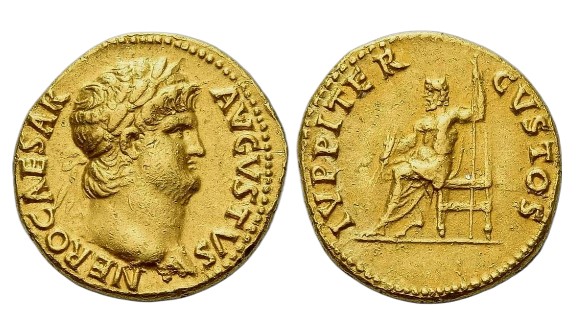
Coins from the reign of Nero (AD 54–68) are among the most artistically refined of the early Roman Empire. Following his currency reform in AD 64, Nero reduced the weight of gold and silver coins, which led to a prolific output of new designs. Rarity and value are largely driven by these diverse reverse types, especially those depicting the architectural wonders of Rome.
Most Valuable Nero Coins
The following coins represent the most sought-after and high-value issues for collectors:
- Gold Aureus (Jupiter Custos Type): Struck between AD 64 and 68, these coins feature Jupiter seated on a throne. They were issued after the discovery of the Pisonian conspiracy in AD 65 to thank “Jupiter the Guardian” for the Emperor’s safety.
- Market Value: High-grade specimens (Extremely Fine) currently realise between £6,000 and £15,000.
- Mintage Information: While exact ancient mintage figures are unknown, these are among the most frequent Nero aurei seen at auctions, though they remain significantly rarer than silver issues.
- Gold Aureus (Salus Type): Features the goddess Salus (Health/Safety) seated on a high-backed throne.
- Market Value: Recent auction prices for NGC-certified specimens range from £2,400 ($3,200) to over £10,700 ($14,000), depending on strike quality.
- Bronze Sestertius (Port of Ostia): One of the most famous ancient coins, providing a detailed aerial view of the harbour at Ostia, including seven to eight ships, a lighthouse, and a statue of Neptune.
- Market Value: Authentic, high-quality specimens are extremely valuable, with recent examples selling for £2,500 to £8,500 (€10,000).
- Mintage Information: Classified as “very rare”. Beware of common “Paduan” reproductions that sell for around £70.
- Silver Denarius (Vesta Temple): Depicts the hexastyle round Temple of Vesta on the Roman Forum.
- Market Value: Rare silver types in “Fine” to “Very Fine” condition currently start at approximately £150 to £500 at auction. Exceptional specimens can exceed £3,000.